Obesity & Reflux Explained by Assoc. Prof. Ozan Şen
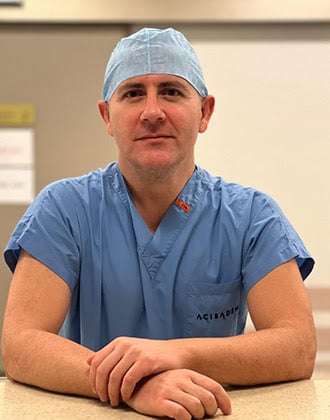
This article was prepared with the insights of Assoc. Prof. Dr. Ozan Şen, Specialist in Obesity and Metabolic Surgery.
Gastroesophageal reflux disease (GERD) occurs when stomach acid flows back into the oesophagus, often causing a burning sensation in the chest. Obesity is one of the most common causes of reflux.
As body weight increases, the pressure in the abdominal cavity rises, impairing the function of the lower oesophageal sphincter and allowing stomach contents to escape upwards. For this reason, reflux is frequently observed in patients with a high body mass index (BMI).
However, many patients believe that if they suffer from reflux, they should have a gastric bypass instead of a sleeve gastrectomy.
Assoc. Prof. Dr. Ozan Şen offers a different perspective:
"In many reflux patients, I prefer the gastric sleeve as the first option. Obesity itself is a major trigger for reflux. As patients lose weight, their reflux symptoms often improve. Additionally, during surgery we can correct anatomical issues that contribute to reflux."
Does Gastric Sleeve Surgery Cause Reflux in Every Patient?
During gastric sleeve surgery, a large portion of the stomach is removed, reducing its capacity. This helps achieve weight loss and also balances internal gastric pressure.
During the procedure, the angle between the stomach and the oesophagus is restored, preventing stomach acid from flowing back into the oesophagus.
Dr. Şen emphasizes:
“The success of the surgery depends not only on reducing stomach size but also on correct surgical technique. If we detect a hiatal hernia during preoperative endoscopy or during surgery, we repair it (hiatal hernia repair, cardiopexy). This way, we address both obesity and reflux at the same time"
Reflux & Obesity: Two Conditions That Reinforce Each Other
Obesity increases intra-abdominal pressure, which worsens reflux symptoms. Meanwhile, reflux can lead to sleep disturbances, heartburn, chronic cough, and a significant reduction in quality of life.
Studies show that reflux symptoms significantly decrease in most patients who lose weight after bariatric surgery.
Therefore, when performed with proper surgical technique, gastric sleeve surgery can be an effective treatment option for both weight loss and reflux.
Conclusion: One Surgery, Two Solutions
Dr. Ozan Şen’s approach gives hope to patients suffering from reflux:
“Every patient’s anatomy is unique. However, in the right patient, gastric sleeve surgery can permanently resolve both obesity and reflux.Preoperative tests are essential to determine the most suitable surgical approach.”

Good news for patients hesitant about sleeve surgery due to reflux:
In patients with severe symptomatic reflux, gastric sleeve + anti-reflux procedures can also be performed in the same session, such as:
-
Nissen-Sleeve
-
Toupet-Sleeve
With the right surgical planning, both reflux and obesity can be controlled in a single operation.
Frequently Asked Questions (FAQ)
1️⃣Can I have gastric sleeve surgery if already have reflux?
Yes. According to Assoc. Prof. Dr Ozan Şen, most patients with reflux can safely undergo sleeve gastrectomy, primarily when performed with proper surgical technique that corrects the anatomical causes of reflux.
2️⃣ Will my reflux get worse after the surgery?
Reflux may worsen if the surgery is done incorrectly or if the anatomical angle is distorted. Assoc. Prof. Şen emphasizes that: “We repair the anatomical structures that cause reflux during surgery, eliminating this risk.”
3️⃣ How long after surgery will improve?
Most patients notice a significant improvement within the first few months of weight loss. Consistent follow-up and diet adjustments help accelerate this process.
4️⃣ If I have reflux, is bypass better than sleeve?
Not necessarily.
Assoc. Prof. Şen frequently performs sleeve gastrectomy as the first option:
-
Weight loss often resolves reflux.
-
If needed, sleeve + anti-reflux techniques (Nissen-Sleeve, Toupet-Sleeve) can be used.
-
Gastric bypass can make future revision surgeries more difficult.
-
Some studies show that even after gastric bypass, certain patients continue to need PPI (acid-reducing) medications.
Obesity is a chronic condition, so the long-term strategy is important.
5️⃣ Will my reflux disappear completely after?
Most patients experience a significant reduction in reflux after surgery. However, long-standing reflux may require follow-up and supportive treatment.
6️⃣ What if I also have a hiatal hernia?
Assoc. Prof. Şen repairs the hiatal hernia during the gastric sleeve procedure, treating both problems in a single operation.
7️⃣ What tests are required before surgery?
Routine preoperative tests include:
-
Endoscopy
-
EKG
-
Chest X-ray
-
Comprehensive blood tests
These help determine whether the stomach and esophagus are suitable for surgery.
Scientific references:
- https://pubmed.ncbi.nlm.nih.gov/32428830/
- https://pubmed.ncbi.nlm.nih.gov/35258016/
- https://pubmed.ncbi.nlm.nih.gov/31521563/
💬 Ready to Learn the Facts About Gastric Sleeve?
✅ Your transformation starts here.
Thinking about your own journey?
Every patient comes to Turkey for a different reason. Tell us yours - your coordinator replies on WhatsApp.