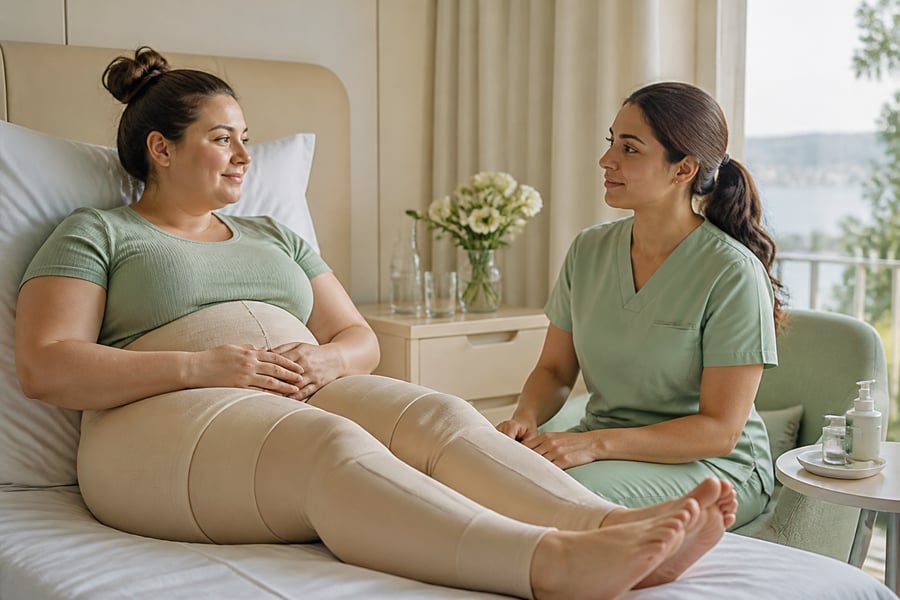
Lipedema affects an estimated 11 to 19 percent of women, yet many wait years before receiving an accurate diagnosis. If you have been researching lipedema treatment in Turkey, you have probably noticed that pricing, package details, and aftercare descriptions vary widely between providers.
Compare lipedema surgeons: see named surgeons, live package prices and the Verified by &NewMe badge on lipedema surgeons in Istanbul, or read the lipedema cost guide.
This guide covers what lipedema liposuction in Turkey typically costs, what a fair all-inclusive quote should include, and what proper pre-operative and post-operative care involves. You will also find practical questions to ask providers so you can compare options with confidence. Andnewme created this resource to help you make a well-informed decision before committing to travel abroad.
Key Takeaways: Lipedema Surgery in Turkey
- Lipedema is a chronic fat disorder that resists diet and exercise, requiring specialised liposuction techniques for effective symptom relief.
- Costs in Turkey are typically quoted per stage because most patients need two to four sessions spaced months apart.
- A transparent quote should include the consultation, procedure, anaesthesia, hospital stay, compression garments, and follow-up appointments.
- Andnewme helps you compare verified providers, review patient experiences, and request personalised quotes before travelling.
- Proper aftercare, including compression therapy, manual lymphatic drainage, and scheduled follow-ups, is just as important as the procedure itself.
What Is Lipedema and Why Is It So Often Misdiagnosed?
How Lipedema Differs from General Weight Gain
Lipedema is a progressive condition characterised by symmetrical subcutaneous fat accumulation, primarily in the legs and sometimes the arms. Unlike general weight gain, this fat does not respond to calorie restriction or exercise. The tissue is often tender, bruises easily, and the limbs appear noticeably larger than the torso.
The condition almost exclusively affects women and tends to surface during hormonal changes such as puberty, pregnancy, or menopause. A hallmark clinical feature is that the feet and hands remain unaffected, which helps distinguish lipedema from conditions like lymphedema or cellulite.
Because the fat distribution can resemble general weight gain, many patients spend years receiving dietary advice that does not address the underlying condition. A 2025 study in Plastic & Reconstructive Surgery Global Open found that lipedema is staged from I through IV based on progression, and more advanced stages typically require multiple liposuction sessions.
When Treatment Becomes Part of the Conversation
Conservative measures such as compression garments, manual lymphatic drainage, and targeted exercise can help manage symptoms in earlier stages. When pain persists, mobility declines, or the condition progresses despite these efforts, many patients and their clinicians begin discussing liposuction as a next step.
Lipedema-specific liposuction uses lymph-sparing techniques, blunt cannulas, and tumescent anaesthesia to remove the abnormal fat while protecting lymphatic channels. This is not a cosmetic procedure in the traditional sense. The primary goals are reducing pain, improving mobility, and slowing disease progression. While liposuction can offer meaningful relief, it is not a cure, and ongoing management is usually still part of the picture.
How Much Does Lipedema Surgery in Turkey Cost?
Why the Price Is Usually Quoted Per Stage
Most providers in Turkey quote lipedema treatment costs per stage rather than as a single total. This is because the number of sessions depends on how many areas of the body are affected and how advanced the condition is.
A patient with Stage I lipedema in the lower legs may need one or two sessions. A patient with Stage III involvement across the hips, thighs, lower legs, and arms could require three to four sessions spaced three to four months apart. Each session typically involves removing up to a maximum safe volume of fat, so staging the treatment is a safety measure, not an upsell.
When reviewing quotes, ask specifically whether the price covers one session or the full course of treatment. This single question can prevent significant misunderstandings later.
Why Turkey Is Often Compared with the UK, US, and Germany
Turkey has become a frequent point of comparison for patients researching lipedema liposuction abroad. The main reasons include a well-established medical tourism infrastructure, a high concentration of experienced plastic surgeons, and pricing that is typically lower than in western European countries or North America for comparable clinical standards.
Hospitals and clinics in Turkey operate under the supervision of the Turkish Ministry of Health, and many hold international accreditations such as JCI. Surgeons who perform lipedema-specific liposuction are often members of the Turkish Plastic, Reconstructive and Aesthetic Surgery Association, which enforces professional standards.
The cost difference is largely driven by lower overhead, currency exchange rates, and the competitive nature of Turkey's healthcare market. That said, lower cost should never mean lower standards. The quality of the pre-operative assessment, the technique used, and the aftercare plan matter just as much as the number on the quote.
What Should an All-Inclusive Quote Actually Include?
What Should Be Included Before You Commit
Before signing anything, confirm that these components are covered:
- Consultation and pre-operative assessment: Physical examination, medical history review, and a vascular screening to rule out conditions like deep vein thrombosis.
- The procedure: Confirm the technique, expected duration, and maximum volume of fat to be removed per session.
- Anaesthesia and facility fees: Clarify whether local or general anaesthesia is planned and confirm the facility is accredited.
- Hospital stay: Many providers include a one-night stay for monitoring.
- Compression garments: These are medically necessary and should be fitted to your measurements.
- Follow-up appointments: At minimum, one in-person follow-up before you leave Turkey and a plan for remote consultations after you return home.
- Transfers and accommodation: Many packages include hotel stays and ground transport.
What to Ask If a Quote Looks Unusually Low
An unusually low quote deserves careful scrutiny. If the price seems significantly below the range you have seen from multiple providers, consider asking these questions:
- Does the quote cover only one area, or the full treatment plan for all affected areas?
- Is the anaesthesia type and facility fee included, or are those billed separately?
- Are compression garments and post-operative care appointments part of the package?
- What is the surgeon's specific experience with lipedema liposuction, as opposed to cosmetic liposuction?
- Is the facility accredited, and can you verify this independently?
A lower price is not automatically a warning sign. Turkey's cost of living and healthcare economics genuinely support lower pricing. The concern arises when key components are excluded from the quote, leaving you to cover them out of pocket after you arrive.
What Happens Before and After the Procedure?
What a Proper Pre-Operative Assessment Should Cover
A thorough pre-operative assessment is one of the clearest indicators of a reputable provider. Your clinical team should evaluate:
- Disease staging: Formal classification (Stage I through IV) to determine treatment plan and session count.
- Vascular screening: Duplex ultrasound or venous assessment to rule out deep vein thrombosis or chronic venous insufficiency.
- General health review: Blood work, coagulation profiles, and current medication review completed in advance.
- Realistic expectations: A candid discussion about what liposuction can and cannot achieve. It reduces abnormal fat and pain, but it is not a cure.
If a provider skips or rushes through any of these steps, treat that as a significant concern. Experienced practitioners view the pre-operative assessment as foundational to patient safety, not as an optional add-on.
What Recovery and Aftercare Should Look Like
Recovery from lipedema liposuction follows a predictable timeline, though individual experiences vary. In the first week, swelling and bruising are at their peak, and most patients need assistance with daily activities.
By weeks two to three, many patients can resume light activities. Full recovery typically takes several months. A proper aftercare plan should include:
- Compression therapy: Fitted garments worn continuously at first, then transitioning to daytime use.
- Manual lymphatic drainage: Specialised massage sessions to reduce swelling and support healing.
- Gentle movement: Light walking within the first few days, building up gradually.
- Wound care: Keeping incision sites clean and monitoring for signs of infection.
- Dietary guidance: Staying hydrated and eating nutrient-dense meals during healing.
Ask your provider how they handle aftercare once you return home. A reputable clinic will offer remote follow-up consultations and provide written recovery guidelines for your local healthcare team.
How to Compare Providers Without Guessing
Questions to Ask About Technique and Experience
Not all liposuction techniques are suited for lipedema, and not all surgeons have specific training in this condition. When comparing providers, these questions can help you assess their suitability:
- What liposuction technique do you use for lipedema, and why? (Tumescent, water-assisted, and power-assisted are common lymph-sparing approaches.)
- How many lipedema-specific procedures have you performed?
- What is your approach to staging, and how do you determine which areas to treat first?
- What is the maximum volume of fat you remove per session?
- Can you provide before-and-after photographs of lipedema patients specifically, not just cosmetic liposuction patients?
Andnewme lets you compare verified surgeons and review patient ratings, making it easier to evaluate providers based on documented experience rather than marketing claims alone.
Why Follow-Up Support Matters as Much as the Procedure Itself
Lipedema management does not end when the procedure is complete. Because most patients need multiple sessions and long-term compression therapy, the quality of a provider's follow-up support can significantly affect your overall outcome.
Ask how the provider handles communication between sessions. Will you have access to your surgeon or a dedicated patient coordinator? Is there a protocol for reporting complications after you have returned home? Does the clinic coordinate with local physiotherapists or lymphatic drainage specialists in your country?
Providers who invest in post-procedure support tend to produce more consistent outcomes. This is because recovery compliance, including compression wear, lymphatic drainage, and gradual return to activity, directly influences how well results hold over time.
Understanding Lipedema Liposuction Techniques
Tumescent Liposuction for Lipedema
Tumescent liposuction is the most widely used technique for lipedema treatment. The surgeon injects a solution of saline, lidocaine, and epinephrine into the treatment area before fat removal. This solution numbs the tissue, reduces bleeding, and inflates the fat layer so the cannula can move through it with less force.
The key advantage for lipedema patients is that tumescent technique allows surgeons to work slowly and deliberately, protecting lymphatic channels while removing large volumes of abnormal fat. Procedures typically last three to five hours, depending on the area being treated.
Water-Assisted and Power-Assisted Methods
Water-assisted liposuction uses a pressurised stream of water to loosen fat cells before suctioning them out. This approach can be gentler on surrounding tissues and may reduce post-operative bruising in some patients.
Power-assisted liposuction uses a vibrating cannula that breaks up fat deposits more efficiently, which can shorten procedure time. Both methods are considered lymph-sparing when performed by an experienced surgeon using blunt-tipped cannulas and a careful technique.
Your surgeon should explain which method they recommend for your specific case and why. The choice often depends on the volume of fat to be removed, the areas being treated, and the surgeon's training and experience.
Why Lymph-Sparing Technique Is Non-Negotiable
Regardless of the specific method used, the distinguishing factor in lipedema liposuction is a lymph-sparing approach. Standard cosmetic liposuction focuses on contouring and appearance. Lipedema liposuction prioritises symptom relief, functional improvement, and protection of the lymphatic system.
Damage to lymphatic vessels during the procedure can worsen swelling and potentially trigger secondary lymphedema. This is why the surgeon's experience with lipedema specifically, not just general liposuction for body contouring, is a critical factor in your decision.
What International Patients Should Know About Travelling to Turkey
Planning Your Trip Around Your Treatment Schedule
Most international patients plan to stay in Turkey for five to seven days per treatment session. This allows time for the pre-operative consultation, the procedure, immediate post-operative monitoring, and at least one in-person follow-up before flying home.
If your treatment plan involves multiple sessions, you will typically return to Turkey every three to four months. Some patients choose to schedule their sessions around holidays or longer breaks from work to allow adequate recovery time.
Confirm with your provider whether the package includes airport transfers, hotel accommodation during your stay, and any language support. Many Turkish clinics employ English-speaking patient coordinators who manage scheduling, transport, and communication between you and your medical team.
What to Prepare Before You Leave Home
Before travelling, gather and share your complete medical records with the clinic, including any imaging, blood work, or specialist reports related to your lipedema diagnosis. This helps the surgical team prepare a treatment plan before you arrive, maximising the time you spend in Turkey.
Arrange for someone to accompany you or be available to assist during the first few days after your procedure. Light, loose-fitting clothing that fits comfortably over compression garments will make the journey home more manageable.
Also confirm travel insurance coverage. Some policies exclude elective procedures performed abroad, while others offer specific medical tourism coverage. Clarify this before you book.
FAQs About Lipedema Surgery in Turkey
How Many Sessions Do Most Patients Need for Lipedema Liposuction?
Most patients require two to four sessions, spaced three to four months apart. The number depends on your disease stage and how many body areas are affected. Your surgeon should outline the full treatment plan during the initial consultation.
Is Lipedema Surgery Covered by Insurance?
Insurance coverage varies by country and policy. Some insurers classify lipedema liposuction as medically necessary when conservative treatments have failed, while others consider it elective. Request a letter of medical necessity from your diagnosing physician and check with your insurer before committing.
How Long Is Recovery After Lipedema Liposuction?
Initial recovery typically takes two to three weeks, during which swelling and bruising are most noticeable. Full recovery, including the resolution of residual swelling, can take several months. Andnewme connects you with providers who offer detailed recovery guidance and remote follow-up support.
Can Lipedema Come Back After Liposuction?
Liposuction permanently removes the treated fat cells. However, lipedema is a chronic condition, so new fat accumulation can occur over time, particularly if the disease progresses. Ongoing compression therapy, exercise, and regular monitoring help maintain results long-term.
What Is the Difference Between Lipedema Liposuction and Cosmetic Liposuction?
Lipedema liposuction uses lymph-sparing techniques with blunt cannulas to remove pathological fat while protecting lymphatic vessels. Cosmetic liposuction focuses on body contouring and appearance. The surgical approach, tools, and post-operative care differ significantly between the two.
How Do I Verify a Surgeon's Experience with Lipedema in Turkey?
Ask for lipedema-specific before-and-after photographs, patient references, and details about the surgeon's training in lymph-sparing techniques. Andnewme lists verified providers with patient reviews, making it easier to assess experience and patient satisfaction before booking a consultation.
In Conclusion: How to Compare Lipedema Quotes With Clearer Expectations
Comparing lipedema treatment options across borders is a significant undertaking. The most practical step you can take is to understand exactly what each quote covers and what it does not.
Focus on the components that affect your safety: the surgeon's lipedema experience, the technique used, and the quality of post-operative support. A lower total cost means very little if it excludes compression garments, follow-up care, or vascular screening.
Give yourself time to ask detailed questions and compare providers based on documented experience. If you are exploring lipedema treatment in Turkey, Andnewme can help you request personalised quotes from verified providers and plan your treatment with clearer expectations.
Thinking about your own journey?
Every patient comes to Turkey for a different reason. Tell us yours - your coordinator replies on WhatsApp.