The Real Reasons Some Patients Arrive But Cannot Have Gastric Sleeve
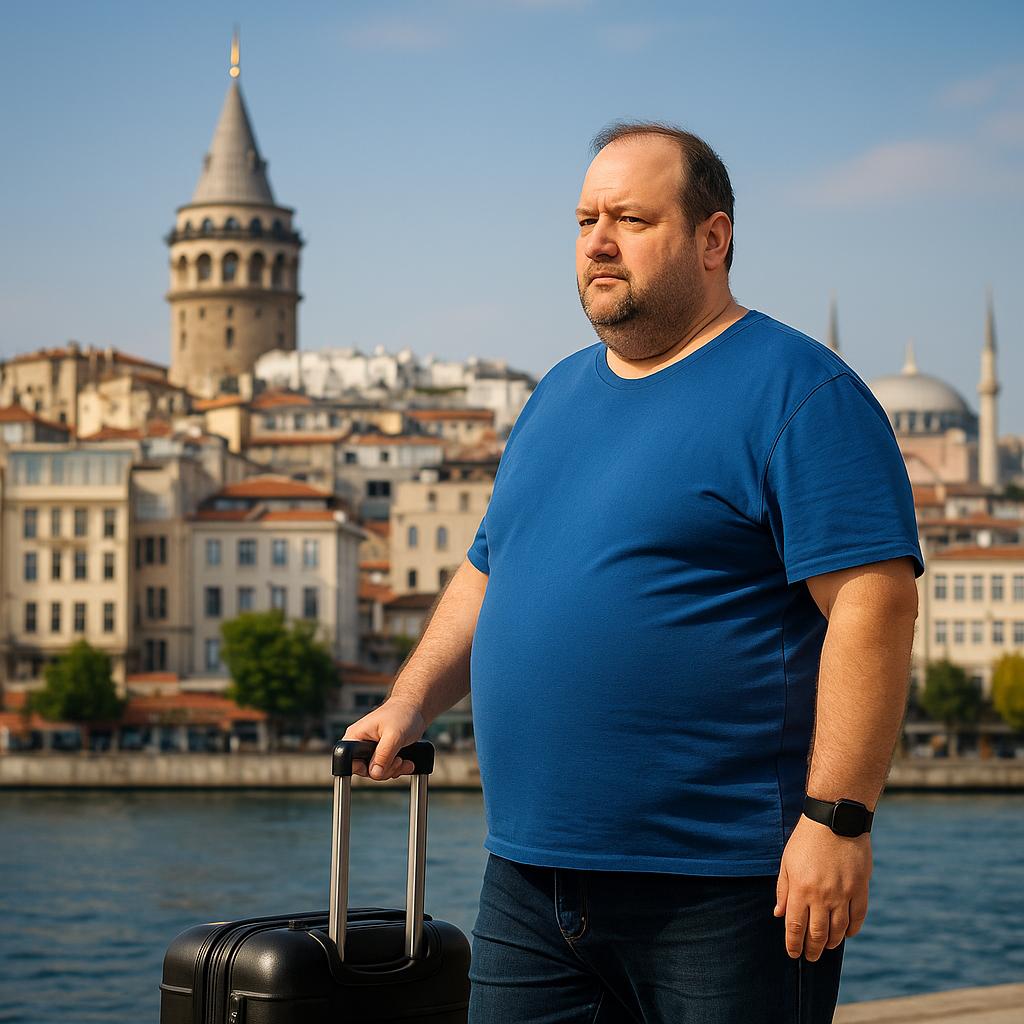
Travelling abroad for gastric sleeve surgery is a big step — exciting, emotional, and life-changing.
But there is one question patients rarely ask:
“Is it possible to arrive in Türkiye and still be denied surgery?”
The honest answer is: yes, it can happen — but it is almost always preventable.
In this article, we explain:
- The real reasons surgery might be cancelled on arrival
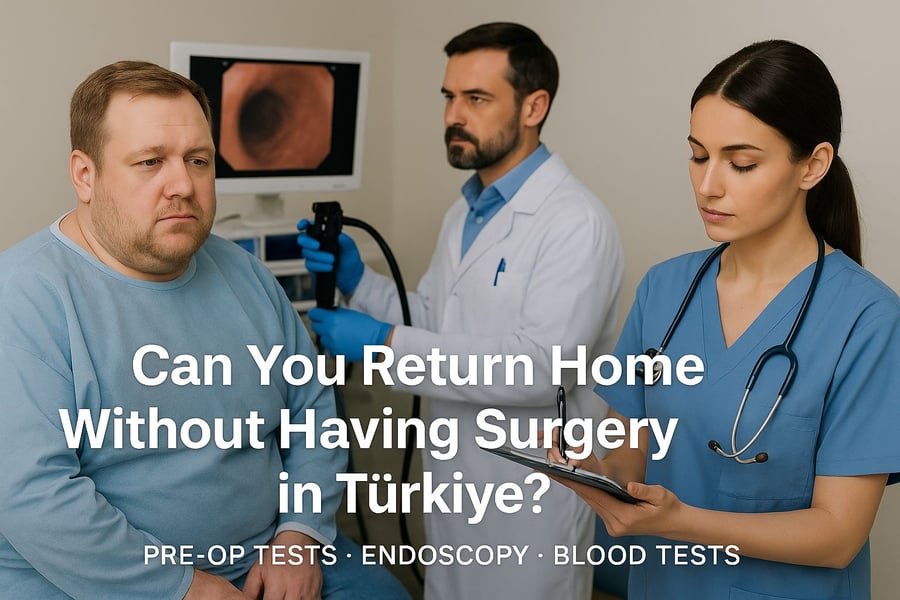
- What tests reveal that pre-arrival forms cannot
- How you can prevent this situation
- Real examples from patient experiences (anonymised)
1. Pre-Arrival Approval Is Not a Final Approval
Even if your surgeon has initially approved you based on:
-
Your reported weight
-
Your medical form
-
Photos or scans
-
Your health history
2. The Most Common Reasons Surgery Gets Cancelled After Arrival
Below are the real-world situations our team — and many bariatric teams globally — have encountered.
1. Hidden medical conditions discovered in tests
Even patients who “feel healthy” can have underlying issues such as:
• Active stomach ulcers
Endoscopy may reveal an ulcer that makes surgery unsafe.
➡️ Solution: 6–8 weeks of treatment, then re-evaluation.
• Untreated severe anemia
Low hemoglobin increases anesthesia and healing risks.
➡️ Solution: Iron treatment + delayed surgery.
• Positive Hepatitis B/C or other infectious markers
Some markers require delayed surgery or referral to a specialist centre.
➡️ Solution: Additional treatment or clearance needed.
• Pregnancy
Yes — this has happened.
➡️ Surgery cannot be performed if pregnancy hormones are present.
2. The patient’s real weight/BMI is much higher than declared
This is more common than people think — sometimes by mistake, sometimes due to shy reporting.
If BMI is significantly higher than expected:
- Surgical time and equipment requirements change
- Additional anesthesia support may be needed
- Extra pre-op diet may be mandatory
➡️ Result: Surgery may be postponed until the patient loses some weight safely.
3. The patient did NOT follow the 2-week pre-op diet
This puts the patient at major risk because the liver does not shrink enough.
If the liver is too large, the surgeon cannot safely see the anatomy.
➡️ Result: Surgery may be cancelled or rescheduled.
4. Medications or supplements the patient “forgot to mention”
Examples:
- Blood thinners
- Unreported diabetes medication
- Certain herbal supplements
- Recreational substances
Some increase bleeding risk or interact with anesthesia.
➡️ Result: Surgery may be postponed until medication washout is complete.
3. Real Examples (Anonymous Cases)
These are typical scenarios — all based on real patient patterns:
⭐ Case 1: The Surprise Ulcer
Patient arrived approved.
Endoscopy showed a bleeding ulcer.
Surgery postponed; patient treated and returned 8 weeks later.
⭐ Case 2: Unexpected Pregnancy
A patient’s blood test showed elevated HCG levels.
She had no idea she was pregnant.
Surgery cancelled immediately for safety.
⭐ Case 3: Actual Weight +12 kg Higher
BMI turned out much higher than declared.
The anesthesiologist recommended 2–4 weeks of diet before surgery.
Patient returned home and rebooked later.
⭐ Case 4: Severe Iron Deficiency Found in Tests
Despite feeling “fine,” blood work showed very low hemoglobin.
Surgery postponed for treatment.
⭐ Case 5: “Silent Jaundice” — Undiagnosed Hepatitis / Liver Issue
A patient arrived for surgery with no symptoms and no known history of hepatitis.
During routine pre-op blood tests, the team detected:
- Elevated liver enzymes (ALT/AST)
- Abnormal bilirubin levels
- Hepatitis markers suggesting past or active infection
Even though the patient felt completely fine, these results indicated liver stress or possible hepatitis, making surgery unsafe at that moment.
➡️ Result: Surgery was cancelled.
➡️ Next step: The patient was referred to a hepatologist for full evaluation and treatment.
➡️ Surgery was only possible after specialist clearance.
This was extremely important for the patient’s safety — anesthesia and bariatric surgery are risky when liver function is compromised.
4. How to Make Sure This Never Happens to You
✔️ Be 100% honest about your weight
Your medical plan depends on accuracy, not perfection.
Nobody is judging you — your safety depends on real numbers.
✔️ Follow your pre-op diet exactly
The liver shrinkage is one of the most important safety factors.
✔️ Share all medications
Even vitamins, herbal teas, or supplements matter.
✔️ Do a basic blood test in your own country
If possible, check:
- Iron levels
- Hemoglobin
- H. pylori
- Pregnancy test
- Liver enzymes
✔️ Take your pre-op stomach protector
Especially if you have reflux or a history of gastritis.
5. Final Message: The Goal Is Never to Cancel — It’s to Protect You
Surgeons in Türkiye operate with extremely high safety standards.
Surgery is only stopped when it would be risky — and that is always in your best interest.
For 99% of patients, everything goes smoothly.
Cancellations happen only when your health requires it.
Call to Action
Want to know if you are eligible?
Fill out the short form below — it only takes 2 minutes, and our medical team will assess your case carefully.
Thinking about your own journey?
Every patient comes to Turkey for a different reason. Tell us yours - your coordinator replies on WhatsApp.